COVID-19, short for Coronavirus Disease-19, is a respiratory disease caused by SARS-CoV-2 and was first identified in 2019. On January 30, 2020, the World Health Organization (WHO) COVID-19 outbreak a Public Health Emergency of International Concern. By the 11th of March 2020, the disease was identified as a global pandemic by the WHO. Some of COVID-19’s symptoms include fever, cough, fatigue, loss of taste or smell, and a sore throat.
Biotechnology companies developed vaccinations in response to the COVID-19 pandemic, including the Pfizer-BioNTech vaccine, Johnson & Johnson's vaccine, Moderna's vaccine, Novavax's vaccine, and the University of Oxford's AstraZeneca vaccine. These vaccinations differ in their vaccine types, even though they are all designed to combat COVID-19. The Pfizer-BioNTech and Moderna vaccines are mRNA vaccines, whereas the Johnson and Johnson vaccine and the AstraZeneca vaccine from the University of Oxford are non-replicating viral vector vaccines, and the Novavax vaccine is a protein subunit vaccination.
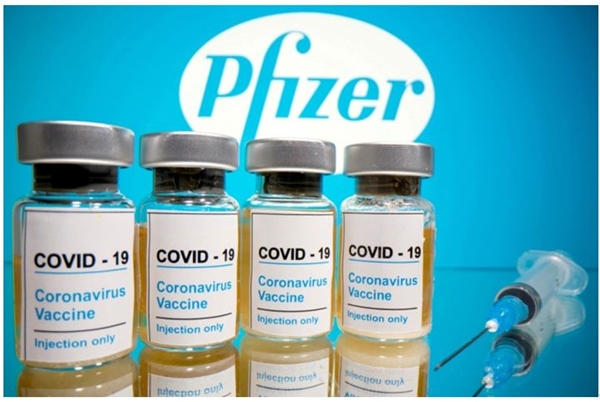 |
| http://www.koreaherald.com/view.php?ud=20201203001092 |
In this article, the mRNA vaccine type will be discussed. The mRNA vaccine type is a newly developed vaccine mechanism in which mRNA that encodes a viral protein that is surrounded by lipid nanoparticles is injected into the body. After injection, our body cells utilize the mRNA to produce the viral protein. When the viral protein is produced, our immune system recognizes the foreign substances, and our body produces antibodies as a result. According to the National Library of Medicine, “[o]nce produced, antibodies remain in the body, even after the body has rid itself of the pathogen, so that the immune system can quickly respond if exposed again.”
The mRNA vaccine has several advantages, including quick production, low cost, and versatility. Large-scale synthesis of mRNA vaccines is achievable, making the technique more efficient, effective, and cost-effective than conventional vaccine production methods. It's also feasible to adjust the kind of mRNA to match the mutant as variants or mutants occur. However, because mRNA is unstable at high temperatures, packaging and distribution of the vaccine may be difficult. Furthermore, its long-term influence is unknown, necessitating additional investigation. mRNA vaccines, on the other hand, have shown considerable potential, as they were instrumental in the COVID-19 immunization procedure.
이서현 강남포스트 학생기자 webmaster@ignnews.kr
<저작권자 © 강남포스트, 무단 전재 및 재배포 금지>


 ‘제3회 역삼1동 어울림 한마당 축제’


