
 |
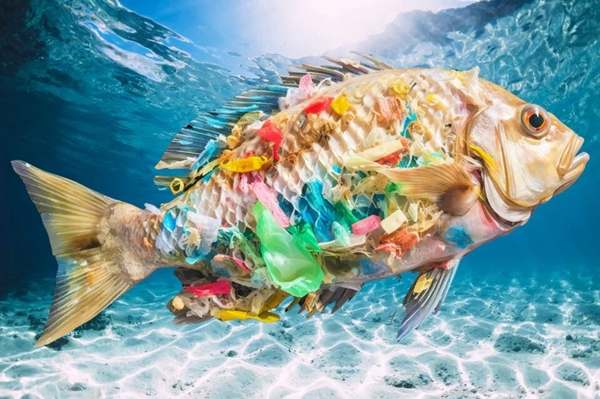
Cardiovascular disease (CVD) and obesity are significant global health challenges, with recent studies highlighting a potential link to microplastic (MP) consumption. MPs, plastic fragments smaller than 5 millimeters, enter the human body primarily through seafood, water, and air. Regular seafood consumers can ingest up to 11,000 MP particles annually.
Research shows that MPs accumulate in tissues, causing oxidative stress and inflammation. These processes damage the cardiovascular system, contributing to atherosclerosis, endothelial dysfunction, and myocardial fibrosis. Studies in animals confirm MPs accelerate oxidative damage and lead to heart complications, while human studies have found MPs embedded in arterial plaques significantly increase the risks of heart attack and stroke.
 |
| https://cdn.shopify.com/s/files/1/0573/7569/files/fish_microplastic_1medium-960x640_1000x.jpg?v=1710904616 |
MPs also play a role in obesity by promoting weight gain, metabolic disorders, and insulin resistance. Animal experiments reveal that exposure to MPs leads to increased adiposity and oxidative stress, both critical factors in cardiovascular risk. Obesity further exacerbates CVD by elevating blood pressure, damaging vascular systems, and promoting chronic inflammation.
Furthermore, since the research claims that seafood such as clams or fish contains more significant amounts of microplastic compared to other food sources, people with large consumption of seafood are recommended to take care of their MP consumption.
Oxidative stress, an imbalance of reactive oxygen species (ROS), is central to MP-induced health issues. Excess ROS damages DNA, lipids, and proteins, forming arterial plaque and impairing vascular functions. MPs amplify these effects, creating a cycle of inflammation and cardiovascular damage.
The link between MPs, obesity, and CVD highlights the environmental impacts on human health. With MPs contaminating ecosystems and food sources globally, their role in increasing cardiovascular risks calls for urgent attention. Efforts to reduce plastic pollution and mitigate its health impacts are essential. Further research is needed to fully understand the long-term consequences of MP exposure and develop effective public health interventions.
신주호 강남포스트 학생기자 webmaster@ignnews.kr
<저작권자 © 강남포스트, 무단 전재 및 재배포 금지>
 ‘제3회 역삼1동 어울림 한마당 축제’


