
 |
Current Applications of AI in Radiology
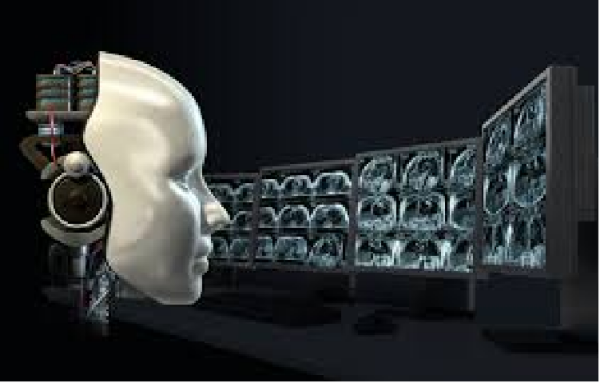
AI is now widely used as an assistive tool in radiology. It enhances diagnostic accuracy by detecting subtle abnormalities in medical images—such as tumors in mammograms, lung nodules in CT scans, or strokes in brain imaging—often matching or even exceeding human performance in specific tasks. For instance, AI-assisted breast cancer screening has been shown to increase detection rates by 21% while reducing missed diagnoses.
Beyond diagnostics, AI streamlines workflows by prioritizing urgent cases, automating measurements, drafting reports, and improving access to care in underserved regions through teleradiology. This efficiency can reduce radiologists’ workloads by 30–50%, helping address staff shortages and burnout.
 |
Limitations Preventing Full Replacement
AI cannot fully replace radiologists due to several critical limitations:
Lack of clinical context: Since AI analyzes images in isolation, it cannot integrate patient history, lab results, or symptoms—essential components of medical diagnosis.
Inability to perform procedures: Tasks such as biopsies, patient counseling, or leading multidisciplinary teams require human judgment, empathy, and communication.
Ethical and technical concerns: AI often functions as a "black box," with opaque decision-making processes that raise accountability concerns in the event of errors. Moreover, biases in training data can exacerbate healthcare disparities. AI also struggles with complex or atypical cases that fall outside its learned patterns.
Environmental impact: Training AI models requires massive computational power, resulting in significant energy consumption and carbon emissions—comparable to tens of thousands of airline flights.
The Future: Human–AI Partnership
Experts agree that AI will augment, not replace, radiologists. The emerging model emphasizes collaboration between humans and machines:
AI handles routine tasks: These include screening triage (e.g., mammography), quantitative analysis, and administrative duties.
Radiologists focus on complex cases: They integrate imaging data with genomic information or data from wearable devices, oversee AI systems, and deliver patient-centered care.
Organizations such as the RSNA (Radiological Society of North America) and ACR (American College of Radiology) highlight this synergy, noting that “radiologists who use AI will replace those who don’t.” To ensure sustainable integration, regulatory frameworks and ongoing training—such as developing AI management skills—are essential.
AI excels in pattern recognition and operational efficiency but lacks the holistic judgment required in medical practice. Its most effective role is enabling radiologists to deliver faster, more accurate care while helping to address global workforce shortages. Full autonomy remains unlikely unless challenges related to transparency, liability, and clinical context are resolved.
피수영 강남포스트 학생기자 webmaster@ignnews.kr
<저작권자 © 강남포스트, 무단 전재 및 재배포 금지>
 ‘제3회 역삼1동 어울림 한마당 축제’


