
 |
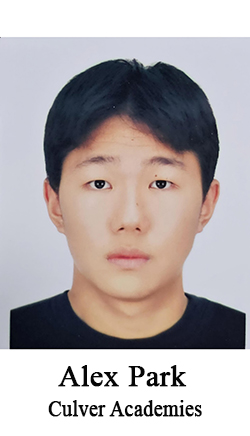
I was selected for an eight-week internship at Yonsei Hue Dental Clinic and have completed the first four weeks. Through this experience, I have begun to understand the intersection between medical waste and environmental responsibility within a clinical setting. In this article, I hope to share insights from my time at the clinic, focusing particularly on how medical environments manage waste and the broader implications for sustainability.
While I was still in the United States, I noticed that even among my peers and teachers there was a general lack of awareness regarding the severity of medical waste and its broader consequences. My perspective began to shift when my supervisor at the clinic handed me a copy of Daily Dental. Reading it exposed the extent of my earlier misconceptions.
According to Health Care Without Harm, the global healthcare sector accounts for 4.4% of total greenhouse gas emissions, a statistic that left me genuinely stunned. A dental school in Hungary, Semmelweis University, conducted a waste audit over a three-day period and documented 168 bags of waste, averaging 60 kilograms of hazardous material daily. Notably, personal protective equipment (PPE) constituted 47% of this waste, with gloves alone making up 65% of that category, followed by paper and wet tissues (22%), patient aprons (17%), special waste (12%), and disposable plastic products (10%). When I asked why clinics rely so heavily on single-use items like gloves and tissues, my supervisor explained that many practitioners believe that wearing gloves eliminates the need for handwashing.
Consequently, gloves are frequently overused. An article from the Journal of Dental Sciences that my supervisor later shared revealed that more than 90 percent of dentists fail to follow proper hand hygiene protocols, despite their rigorous use of gloves and masks.
Over the course of my internship, I had the opportunity to observe the sterilization process in depth. Rather than simply focusing on how to eliminate as many microorganisms as possible, I became increasingly interested in how to make sterilization more efficient and sustainable, ensuring that even materials destined to become medical waste remain uncontaminated and bacteria-free for extended periods, potentially even permanently.
I paid particular attention to how the sterilization machines function. Most rely on high temperatures, pressure, and chemical vapor to achieve total microbial elimination. With recent technological advancements, it is now possible to maintain sterility for up to 96 weeks under ideal conditions.
In practice, however, the sterile state typically lasts between six months and two years. My personal research goal is to explore how this duration might be extended to as long as ten years, regardless of environmental fluctuations, while also ensuring that the process does not introduce further harm to the environment. Still, no matter how long sterility can be preserved, the foremost priority must remain the reduction of medical waste at its source.
In the first four weeks of my internship, I came to a realization that fundamentally shifted my understanding of clinical spaces: a dental clinic is not solely a place for healing patients, but also a site where environmental impact is continuously negotiated through countless, often overlooked, daily practices. From the management of medical waste to the intricacies of sterilization protocols, each decision made within the clinic holds broader implications for environmental health. As a future environmental engineer, this experience has deepened my awareness of the responsibilities that lie at the intersection of healthcare and sustainability.
What began as an internship in dentistry has become, for me, a formative lesson in the ethics of environmental stewardship. In the following article, I will share detailed observations from within the clinic on how medical waste is handled, tracing each step of the disposal process to better understand both its real-world application and its broader environmental implications.
박주혁 강남포스트 학생기자 webmaster@ignnews.kr
<저작권자 © 강남포스트, 무단 전재 및 재배포 금지>
 ‘제3회 역삼1동 어울림 한마당 축제’


