
 |
Artificial Intelligence (AI) is often criticized for reinforcing bias and inequality. Yet, across education, healthcare, and agriculture, real-world programs are already showing how AI can bridge gaps. As these technologies expand, the critical question is: Can AI actively reduce inequality rather than deepen divides?
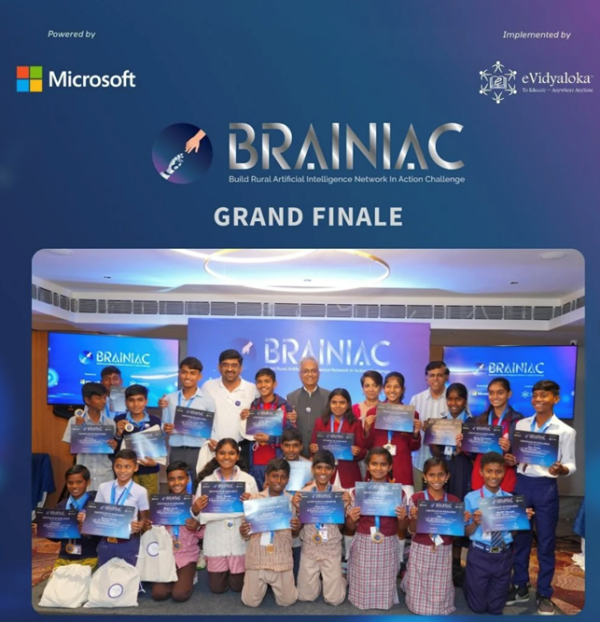
In 2024, Microsoft partnered with eVidyaloka, an Indian non-profit dedicated to rural digital education, to launch the Build Rural Artificial Intelligence Network (BRAIN) program in India, connecting over 400 government schools. By supplying laptops, training teachers, and introducing responsible AI concepts, the program helps 37,000 students gain access to learning tools previously limited to urban schools. Similarly, Infinity Learn began rolling out AI-driven personalized learning in early 2023, analyzing students’ strengths and weaknesses and delivering lessons in multiple languages. These efforts are crucial because they provide rural children with opportunities previously reserved for wealthier families, narrowing the educational divide.
In 2024, AI healthcare tools were deployed across rural India, supporting general practitioners by interpreting blood tests and monitoring symptoms. Around the same time, Emory University in the U.S. piloted AI triage systems in rural clinics. These programs matter because they give patients faster diagnoses and fairer access to treatment regardless of geography. If expanded, such systems could revolutionize how rural communities receive medical care, reducing health inequality on a global scale.
 |
Agriculture also benefits. Since 2023, the Krishi Sathi chatbot—an AI-based virtual assistant designed for farmers—has provided real-time advice in Hindi and English on fertilizers, pest control, and crop health. For farmers lacking direct expert consultation, this technology is transformative: it improves productivity, secures livelihoods, and helps rural economies grow. More importantly, it shows how AI can empower marginalized workers rather than replace them.
These cases demonstrate both potential and risk. AI can expand access, but poor infrastructure, biased data, and lack of regulation may limit its impact. The key insight is clear: these technologies are important not only because they solve immediate problems but because they shift power. Education platforms empower rural children to dream bigger, healthcare AI saves lives in places once neglected, and agricultural chatbots restore dignity to small farmers. If responsibly designed and regulated, AI could become a true equalizer in society.
AI is not a cure-all. But when responsibly developed and thoughtfully applied, it can reduce inequality in meaningful ways. The pressing question remains: will society harness AI to create a fairer future, or allow it to reproduce old patterns of inequality?
이정명 강남포스트 학생기자 webmaster@ignnews.kr
<저작권자 © 강남포스트, 무단 전재 및 재배포 금지>
 ‘제3회 역삼1동 어울림 한마당 축제’


