
 |
The U.S. federal government shutdown has now entered its 43rd day, marking what may become one of the longest budget standoffs in recent memory. The confrontation between President Donald Trump and Congress over funding for the border wall and spending priorities has spilled far beyond Washington’s political circles, touching the everyday lives of millions across the United States.
Thousands of federal employees remain on unpaid leave, while some continue working without pay to keep essential services barely functioning. Across the country, countless museums and national parks remain closed, and basic administrative services—such as passport and visa processing—are operating at a crawl. At airports, the shortage of staff has led to long security lines and frequent flight delays, frustrating travelers across the nation.
The economic damage, meanwhile, continues to snowball. Many small businesses that depend heavily on government contracts are struggling to maintain cash flow. Local economies built around tourism or government institutions are also reeling from steep declines in revenue. Economists warn that the shutdown could weaken consumer confidence and further dampen investment sentiment in the weeks ahead.
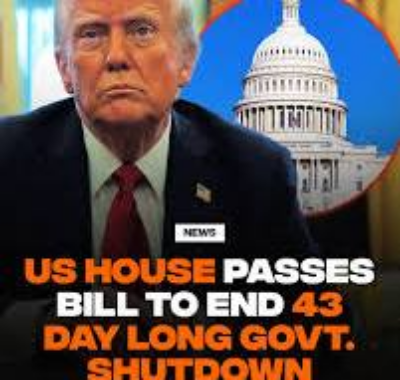 |
Still, there are faint signs of progress. On November 10, the Senate approved a temporary funding bill by a vote of 60 to 40, opening the door to a partial reopening of the government. The House of Representatives is expected to vote soon, and President Trump has indicated his willingness to sign the measure, stating that “swift action is needed to restore stability to the nation.” The compromise reportedly includes short-term spending extensions, limited adjustments to border security funds, and compensation for unpaid federal employees.
Even so, the wounds left by more than 40 days of paralysis will not heal quickly. Federal workers must deal with delayed paychecks, government programs will take time to restart, and communities dependent on federal operations continue to struggle. Political observers say the crisis has deepened public distrust in government and exposed the fragility of Washington’s ability to function.
With the end now seemingly in sight, public attention has shifted. The question is no longer “who won,” but rather “how soon can normal life return?” Even if the shutdown officially ends, many believe the frustration and fatigue built up over the past 40 days will linger long after the government’s lights are turned back on.
하이디 강남포스트 학생기자 webmaster@ignnews.kr
<저작권자 © 강남포스트, 무단 전재 및 재배포 금지>
 ‘제3회 역삼1동 어울림 한마당 축제’


