
 |
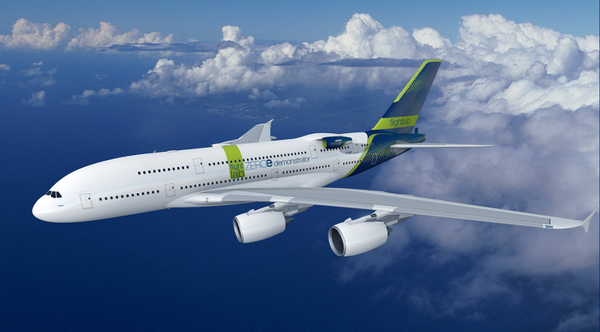
Airbus unveiled hydrogen fuel-cell-based electric propulsion technology at its 2025 Global Summit, raising the possibility of a transition toward decarbonization in the aviation industry. In an announcement, Airbus said, "Hydrogen-based propulsion is a key technology that will fundamentally reduce carbon emissions from long-haul aviation in the future".
According to the International Energy Agency (IEA), the aviation sector currently accounts for about 2% of global carbon emissions, and emissions continue to increase due to growing demand for international flights . In this context, hydrogen-electric aircraft have the potential to replace conventional jet fuel and nearly eliminate emissions.
The engine of the aircraft proposed by Airbus operates by generating electricity with hydrogen fuel cells and using it directly for propulsion. Since there is no combustion process, the technology has attracted attention for its potential to significantly reduce carbon emissions as well as emissions of nitrogen oxides (NOx).
Research on this technology is also underway. A study on liquid hydrogen (LH₂) pipelines at airports, which was recently published on arXiv, concluded that "standardization of storage and supply systems in airports is essential for the era of commercial hydrogen aviation". Some airports in Europe have already begun initial pilot projects.
Experts also view the social impact of hydrogen aircraft as significant. Dr. Neil Scott of the British Aviation Technology Institute (ATI) added that "the introduction of hydrogen aircraft could reduce airlines’ carbon costs and expand demand for eco-friendly tickets".
However, challenges such as the cost of producing liquid hydrogen, the investments needed in airport infrastructure, and safety regulations remain. Nevertheless, Airbus predicted that "commercial operations will be possible on some mid- to long-distance routes in the mid-2030s" if technology verification and international standards are firmly established.
Attention is now focused on whether hydrogen-electric aircraft will be able to transform air travel and reshape the global aviation industry in the future.
 |
수소-전기 항공기, 탄소 없는 하늘길의 시작?
에어버스가 2025년 글로벌 서밋에서 수소 연료전지 기반 전기 추진 기술을 공개하며 항공산업의 탈탄소 전환 가능성이 제기되었다. 에어버스는 발표에서 “수소 기반 추진은 미래 장거리 항공의 탄소 배출을 근본적으로 줄일 핵심 기술”이라고 밝혔다(에어버스 2025 Summit 발표).
국제에너지기구(IEA)에 따르면 현재 항공 부문은 전 세계 탄소 배출의 약 2%를 차지하고 있으며, 국제선 수요 증가로 배출량은 지속적으로 늘고 있다(IEA, Aviation Energy Outlook, 2023). 이러한 상황에서 수소-전기 항공기는 기존 제트 연료를 대체해 배출가스를 거의 없애는 잠재력을 갖고 있다.
에어버스가 제시한 항공기의 엔진은 수소 연료전지로 전기를 생산하고, 이를 전기 모터가 직접 활용해 추진력을 만드는 방식이다. 연소 과정이 없기 때문에 탄소 배출은 물론 질소산화물(NOx) 배출까지 크게 줄일 수 있다는 점이 이목을 끌었다.
이와 관련한 연구도 진행되고 있다. 최근 arXiv에 공개된 공항용 액체수소(LH₂) 파이프라인 연구는 “상업적 수소 항공 시대를 위해서는 공항 내 저장, 공급 체계의 표준화가 필수적”이라고 분석했다(arXiv Preprint, 2024). 유럽 일부 공항은 이미 초기 실증 협의를 시작한 것으로 알려졌다.
전문가들도 수소 항공기의 사회적 영향을 크게 보고 있다. 영국 항공기술연구소(ATI)의 닐 스콧 박사는 “수소 항공기 도입은 항공사의 탄소 비용을 줄이고 친환경 항공권 수요를 확대할 수 있다”고 덧붙였다(ATI 인터뷰, 2024).
다만 액체수소 생산 비용, 공항 인프라 투자, 안전 규정 정비 등 과제도 남아 있다. 그럼에도 에어버스는 기술 검증과 국제 규격 정립이 안정적으로 이뤄질 경우 “2030년대 중반 일부 중단거리 노선에서 상업 운항이 가능할 것”이라고 전망했다(에어버스 기술 브리핑, 2024).
수소-전기 항공기가 실제 하늘길을 바꿀 수 있을지, 향후 국제 항공산업의 움직임이 주목된다.
정진한 강남포스트 학생기자 webmaster@ignnews.kr
<저작권자 © 강남포스트, 무단 전재 및 재배포 금지>
 ‘제3회 역삼1동 어울림 한마당 축제’


