
 |
As climate change becomes a more serious global issue, many new environmental technologies are being developed. Among them, Direct Air Capture, or DAC, is gaining attention as a possible solution for the future. This technology removes carbon dioxide directly from the air, and research and testing are now taking place in several countries.
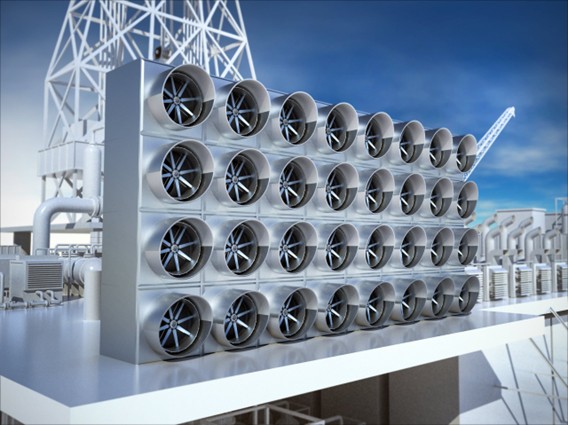
Direct Air Capture uses chemical materials to collect carbon dioxide from the atmosphere. The captured carbon can then be stored underground or reused in other industries. Experts say this technology is meaningful because it can directly reduce the amount of carbon in the air.
Many DAC facilities are now being developed, especially in North America and Europe. In Texas, the United States, a large DAC facility called STRATOS is under construction. When fully operational, it is expected to remove more than 500,000 tons of carbon dioxide each year. It is considered one of the largest DAC projects currently planned.
 |
In Iceland, a carbon removal facility using renewable energy is already in operation. One of its main features is that the captured carbon dioxide is stored deep underground in rock formations for long-term storage.
More companies are also joining DAC efforts. Firms such as Microsoft are investing in DAC projects as part of their strategies to reduce carbon emissions. This shows that businesses are taking a more active role in solving environmental problems.
However, DAC technology still faces some challenges. High installation costs and large energy use are major concerns. Experts believe that as the technology improves, the cost will gradually decrease.
Although Direct Air Capture is still in its early stages, it may play an important role in responding to climate change in the future. With continued research and investment, it is expected to become an important way to reduce carbon in the air.
정진한 강남포스트 학생기자 webmaster@ignnews.kr
<저작권자 © 강남포스트, 무단 전재 및 재배포 금지>
 ‘제3회 역삼1동 어울림 한마당 축제’


