
 |
Companies usually want to avoid failure. But for James Dyson, failure was part of the process of setting up his own company. The founder of Dyson went through thousands of unsuccessful prototypes over the years before his company became internationally famous for vacuum cleaners and other home appliances.
This idea came from a personal problem that James Dyson had faced. The vacuum cleaner he was using was slowly losing suction power as the bag filled up with dust. At the same time, he saw an industrial cyclone system at a sawmill that separated particles from the air without a traditional filter. Dyson started to wonder if he could do the same thing with a much smaller machine.
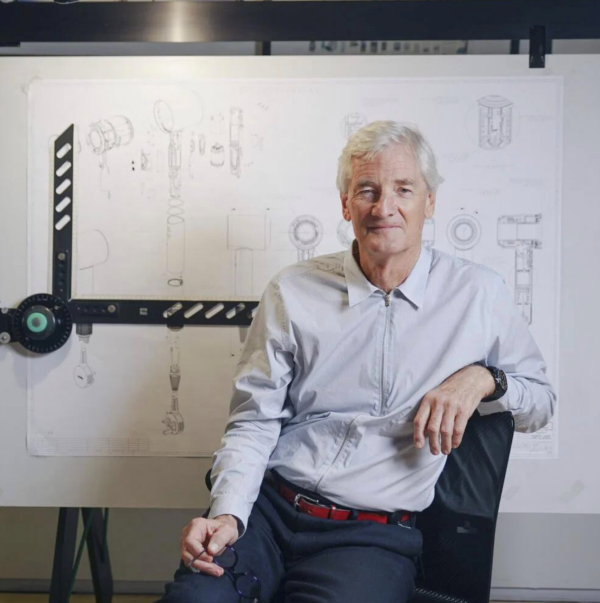
However, it took several years to turn that concept into a tangible product. There were challenges, but Dyson kept building prototypes and improving the design. He elaborated on the process in a 2013 interview with ABC’s Marc Fennell: “there were 5126 failures until I got the last one that worked.”
 |
Dyson saw these failures as indicators of what needed to be altered. He didn’t take the reasons why a prototype failed as proof that the idea was fundamentally flawed. Instead, he used those reasons to improve the next version.
After successfully completing the cyclone vacuum cleaner, a new problem appeared. Dyson’s official records show that major existing vacuum cleaner manufacturers rejected Dyson’s design. At that time, the vacuum cleaner industry was already profitable, but Dyson's technology meant users didn't need to buy replacement vacuum cleaner bags.
Dyson learned how to persevere with his invention rather than give up. Finally, a Japanese company agreed to use his technology in the G-Force vacuum cleaner. He then set up a company under his own name rather than relying on existing manufacturers.
Dyson’s first mass-produced vacuum cleaner under his own brand was the DC01, which went on sale in the UK in 1993. According to Dyson’s historical records, the DC01 became the best-selling vacuum cleaner in the UK within 18 months of its launch.
Dyson’s story teaches us that persistence matters most when it is combined with change. Rather than repeating the same idea over and over, he looked at the reasons for his failures, changed the product and even changed his business plan after failing to secure support from existing manufacturers.
Ultimately, the development of a successful product came about as a result of 5,126 unsuccessful prototypes. James Dyson’s experience shows that failure can be a valuable process if it provides information that helps people make more informed decisions.
Sources :
https://www.abc.net.au/listen/programs/downloadthisshow/sir-james-dyson/4545546?utm_
https://careers.dyson.com/en-gb/who-we-are/?utm_
조건휘 강남포스트 학생기자 webmaster@ignnews.kr
<저작권자 © 강남포스트, 무단 전재 및 재배포 금지>
 ‘제3회 역삼1동 어울림 한마당 축제’


