
 |
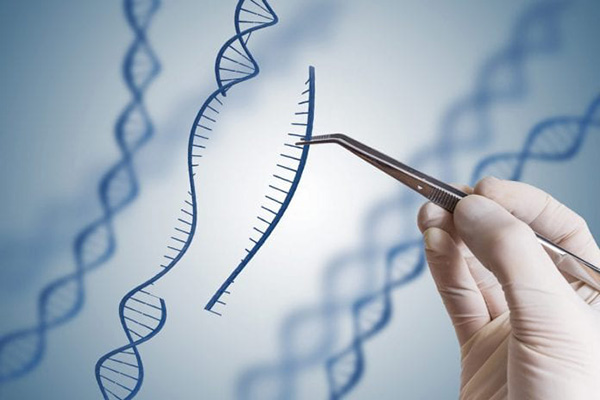
Humankind has never been closer to God than they are today in the field of modern genetics and developmental biology. Looking back, the first traces of genetics throughout history can be found during the beginning of the 19th century, when scientists inquired for specific patterns to the traits and characteristics of rudimentary organisms. It was not until the mid-1950s that scientists were introduced to the novel concept of a double helix structure of genetic material called DNA that encodes most of the essential proteins in our body. However, even among the brilliant minds of that time, the concept DNA sequence was unfathomable. The endless stream of congruent genetic material was too vast and complicated for the ordinary train of mind to comprehend. However, when scientists found that they can purify or separate single genes away from other genes, scientists started to consider reading, reproducing, sequencing and perhaps even changing the genes of the body altogether in a lab, making recombinant DNA. The introduction of Recombinant DNA paved the way for a clearer and more practical understanding of how a gene encodes proteins and how it affects the shown traits of the organism.
 |
Scientists over time became more ambitious, wanting to apply this science into human development and health. Gene traits for certain diseases, for instance, cystic fibrosis or Huntington’s disease, could be prevented by working on the more fundamental parts of the disease-proteins and genes. The problem was that the genome, the whole collection of genes in the organism, was hopelessly boundless, to begin with. To try to use recombinant DNA for the whole genome, the process would take centuries. Then scientists asked themselves, what would happen if instead of focusing on trying to read the genetic material, we looked at the genome as a whole, a systematic look, as an entirety of a picture. This led to the birth of Genomics, the focus on the structure, function, evolution, mapping, and editing of all genes in an organism.
This development sparked a movement, an international project named the Human Genome Project with the goals to identify and map all the genes available in the human genome. This project took more or less 15 years to finish, resources on an international scale, and billions of dollars worth of funding but in the end, we had the whole finished sequence of a human body genome. Over the next decade, the cost of mapping a human genome has decreased astronomically (around 100 million times the original amount) with efficiency at sky-high. Instead of identifying one base at a time, modern genome technology allows us to copy, separate, and reassemble genomes at will, providing the big picture in under no time. What took 15 years and 3 billion dollars for a whole group of intellects to do now takes only 1 run on a modern machine to process over a hundred times the amount of database done before.
With such advancements in science, we can now treat diseases, illnesses, and ailments using genetic identification. Multiple, short-term, ineffective surgeries can now be treated even before the patients realize they are sick. With the introduction of CRISPR, we can now genetically modify whole species at a time and rewrite the very fundamental programming behind life. We can create a brand new species never seen before on Earth or wipe a whole chain off the textbooks. We can genetically engineer and augment our human bodies to match our social and cultural needs. We can artificially induce evolution to prepare the human species for migration to other plants in space. The possibilities are endless and we find ourselves in an era where the innovations of today may change your life forever.
In fact, Biology is just a part of the three disciplines in the general sciences. Yet biology stands out because the work we do today in Biology will shape our quality of life tomorrow. As science advances, ethical and moral aspects of science need to be discussed in length. However, this dangerous journey is what truly excites so many others and makes Biology so special.
이도권 강남포스트 학생기자 webmaster@ignnews.kr
<저작권자 © 강남포스트, 무단 전재 및 재배포 금지>
 ‘제3회 역삼1동 어울림 한마당 축제’


