
 |
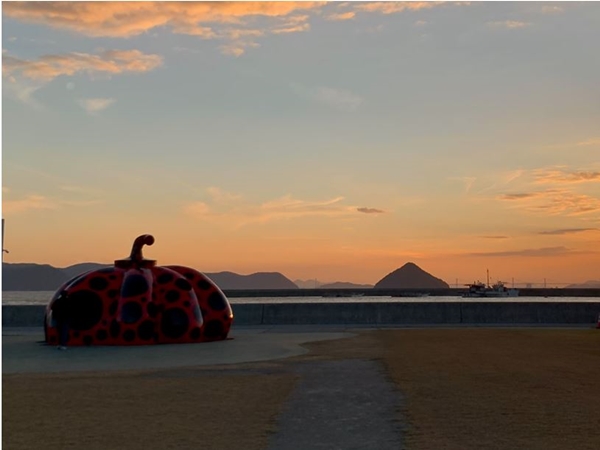
Naoshima is a small island located in Japan’s Seto Inland Sea. During post-bubble Japan, the island faced many challenges, such as unemployment, declining population, and environmental problems. However, Naoshima island stands as one of the most famous and beautiful islands in Japan, attracting hundreds of million tourists every year. The rebirth of the island started with the “Naoshima Project” led by Soichiro Fukutake.
The purpose of the Naoshima Project is to combine the island’s untouched nature with man-made art. Fukutake established buildings such as the Benesse House, Chichu art museum, Lee Ufan Museum, and Ando Museum, displaying numerous artworks of well-known contemporary artists. Apart from the astonishing artworks inside the museums, the building itself is a work of art. The structure and material of the architecture blend in with the mountains and hills of the island, creating an illusion that the building is part of nature and nature is part of the building. Eve Blau, an American historian who teaches at the Graduate School of Design at Harvard, refers to the paradise of Naoshima as a “heterotopia”; where “art and nature, human and natural creativity are brought into a new relationship of reciprocity.”
 |
One of the main projects of this mission was the Art House Project. The Art House Project took place in the Honmura district, transforming old houses into works of art. By placing contemporary installations inside traditional Japanese houses, the Art Houses provide the audience with a sense of harmony created by two seemingly distinct styles. Another thing that is very interesting about this project is that it involved the efforts of the local people. The artists communicated with the residents and encouraged them to participate in the project more actively. This allowed the local people to grow affection towards art.
Over 20 years, the number of tourists in Naoshima grew from about 5,000 to over 640,000. Naoshima grew to become one of the must-see destinations when traveling to Japan, along with Kyoto, Roppongi, and Tsukiji. The Naoshima Project has dramatically affected the lives of the local people. Not only did it provide economic benefits, but the presence of art deeply embedded into their everyday lives added a sense of liveliness. Takao Hamada, mayor of Naoshima states, “The most important thing is that we have been given greater energy, dreams, confidence, and pride.” The legendary Naoshima Project proves how influential art can be, transforming a tiny, underpopulated island into a culture-rich, happy community.
서지안 강남포스트 학생기자 webmaster@ignnews.kr
<저작권자 © 강남포스트, 무단 전재 및 재배포 금지>
 ‘제3회 역삼1동 어울림 한마당 축제’


