
 |
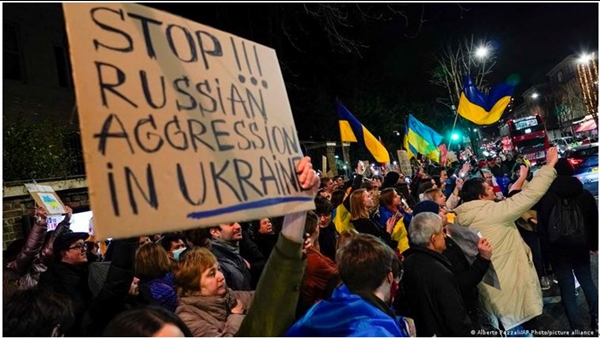
Over the past few weeks, there has been a great issue surrounding the invasion of Ukraine from Russia. This brings up the question of the legitimacy of governments. To what extent are governments legitimate? When does the state’s legitimacy have to be questioned?
A state’s legitimacy might need to be questioned when it focuses too much on military power and aggressiveness, as it might damage citizens’ rights in the process. This strengthening of military power can be used to combat foreign threats, but it can be used to oppress its citizens at the same time. An example of this is Afghanistan. In Afghanistan, after the takeover of the Taliban, there has been an increase in focus on military power and aggressiveness. On the national level, increased military power can be used to oppress the citizens. Vulnerable actors like women are being targeted, as the Taliban government is enforcing their religious beliefs to the daily lives of women there, threatening to cause physical harm.
 |
| https://www.dw.com/en/ukraine-requests-urgent-meeting-of-un-security-council-as-it-happened/a-60880156 |
Another circumstance where the state’s legitimacy may come into question is when the state violates democratic values. Liberals believe that democratic values must be preserved in states to ensure the liberty and peace of their citizens. Considering that a key obligation of a state is to keep its citizens safe, democratic values being ignored might bring questions to the state’s democracy. An example of that would be Hong Kong, where the police forcefully dispersed protests for democratic elections. First of all, not having a fair, transparent election is going against democracy. Second, denying the citizen’s right to free protesting would also go against democratic values. Another example is North Korea, where the dictatorship doesn’t allow for any opposition to the Kim family. The government controls the press and media, which doesn’t allow for checks and balances from the fourth pillar, which results in minimal democratic discourse. Additionally, North Korea doesn’t have any competitive elections, which deprives citizens of liberty and power. In circumstances like the two examples presented, the legitimacy of a state may come into question, as it is unsure if there is popular approval of the government.
유승현 강남포스트 학생기자 webmaster@ignnews.kr
<저작권자 © 강남포스트, 무단 전재 및 재배포 금지>
 ‘제3회 역삼1동 어울림 한마당 축제’


