
 |
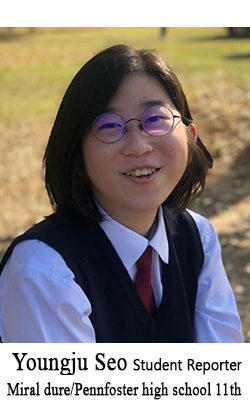
My keen interest in environment has led me to participate in various environmental programs such as the P4G Seoul Summit(4) re-cap as part of the global civic education in my school. Once, I used a toothbrush made of bamboo instead of plastic, but I wondered, "Isn't cutting down bamboo more harmful to the environment?" At the same time, I thought about how to learn about carbon neutrality at school in a fun and hands on way, not just with grand slogans. Based on my experience, I would like to make some suggestions.
World Tuna Day and More
Many students are familiar with World Environment Day(5), but not World Tuna Day.(6) Tuna, like polar bears, are endangered. In addition, 80,000 dolphins are caught and killed yearly while hunting tuna. In December 2020, the International Organization for Standardization (ISO) announced the standard guidelines for measuring the carbon footprint of fish products(7) and suggested a direction for realizing carbon neutrality in the fisheries sector. Students will better understand carbon footprints by measuring the carbon footprint of a can of tuna and discussing the related environmental impact on World Tuna Day.
Cooperation With Companies That Sell Value
The MZ generation consumes value, not products, and our generation understands the value of our environment. This is why we prefer Zero Waste stores that do not provide packaging and the "No Chicken Nuggets" slogan from No Brand, which shouts, "rest for chickens!" The change from "products" to "value" means that even students and schools can become entrepreneurs who can sell value at any time, even if we don't have capital.
Schools must host experience and education programs with companies selling these eco-friendly values. For example, experience the production process at a company that produces products from recycled truck tarps, such as FREITAG. You will be able to understand why consumers support them. Joint education with these value-selling companies may attract future entrepreneurs who sell environmental values and individuals who strive to protect the environment.
Ecofriendly Projects at Schools
If you are a high school student like me, I think having your own eco-friendly projects is essential. Last year, some of my classmates and I made necklaces with discarded sea glass. The experience allowed us to earn and donate money while we promoted the conservation of the environment. We look forward to the following way we can create social value. I believe you can grow your Solar Cow (which helps African children to go to school while the solar cow is charged by solar energy) with your own idea since there are many ways that we can make this planet more beautiful. I hope we can achieve this with our classmates and teachers at our schools.
My suggestions are simple, and they may already have been used somewhere. However, I believe that if we participate today, the silent voice of individuals will turn into a sound influence, and we will be one step closer to making the Earth more sustainable. I also believe that school, where students spend most of their time, is the best place to develop environmental awareness that can be sustained throughout their lives.
References:
1. https://www.un.org/en/climatechange/cop26
2. http://eng.me.go.kr/eng/web/board/read.do?pagerOffset=0&maxPageItems=10&maxIndexPages=10&searchKey=&searchValue=&menuId=461&orgCd=&boardId=1516150&boardMasterId=522&boardCategoryId=&decorator
3. https://eiec.kdi.re.kr/policy/materialView.do?num=215335&topic=,https://www.kdi.re.kr/kdi_eng/kdicenter/eiec_main.jsp
4. https://sdg.iisd.org/events/2021-p4g-seoul-summit/
5. https://www.un.org/en/observances/environment-day
6. https://www.un.org/en/observances/tuna-day
7. https://www.iso.org/standard/74228.html
서영주 강남포스트 학생기자 webmaster@ignnews.kr
<저작권자 © 강남포스트, 무단 전재 및 재배포 금지>
 ‘제3회 역삼1동 어울림 한마당 축제’


