
 |
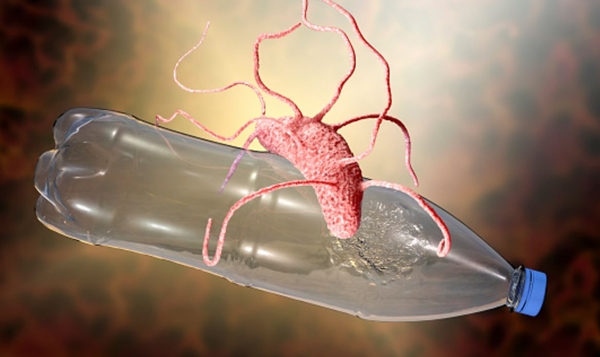
Of the many types of plastic, polyethene terephthalate (PET), the most commonly used plastic in our day-to-day products, ranging from water bottles to clothing, has long been considered a severe threat to our environment due to PET’s non-biodegradable nature. Bacteria, which usually decomposes matter, cannot break it down because it is not made of organic material. While UV can break down plastic, it takes too long, requiring as much as 450 years to break down a plastic bottle.
 |
| https://drive.google.com/file/d/1jtPqst2W_34ObTa2hm7ZFgaHY-EHqOXW/view?usp=sharing |
However, nature has created its environmentalists. In 2016, Kohei Oda and Kenji Miyamoto from Keio University published in Science that they successfully isolated Ideonella sakaiensis, a bacterium that can break down and metabolize plastic. Ideonella sakaiensis relies on PET as its primary energy and carbon source by using two enzymes to deconstruct PET’s polymer structure into terephthalic acid and ethylene glycol, the two monomer building blocks of the plastic.
차정우 강남포스트 학생기자 webmaster@ignnews.kr
<저작권자 © 강남포스트, 무단 전재 및 재배포 금지>
 ‘제3회 역삼1동 어울림 한마당 축제’


